
CIR & BDR: Partnering to Document Human Rights Abuses with Open Source Data
How Improved Data Maturity Enables CIR to Take the Next Step in Uncovering Truth and Ensuring Global Accountability

Menno Herbrink

Tom Uijtdehaag
In today’s connected world, human rights organizations must adapt quickly to manage vast amounts of online open source material. For the Center for Information Resilience (CIR), whose work includes documenting war crimes and human rights abuses worldwide, scalability and security are paramount. At the heart of CIR’s mission is uncovering truth and ensuring accountability, whether in Myanmar, Sudan, Ukraine or beyond. As CIR’s projects grew and the complexity of its investigative efforts expanded, its Data and Tech Team recognized the need for a strategic boost in infrastructure. Enter Big Data Republic (BDR), a technical partner offering expertise and consulting hours to help CIR refine existing processes, minimize growing pains, and continue focusing on what they do best - shedding light on human rights violations.
CIR’s evolving role in global accountability
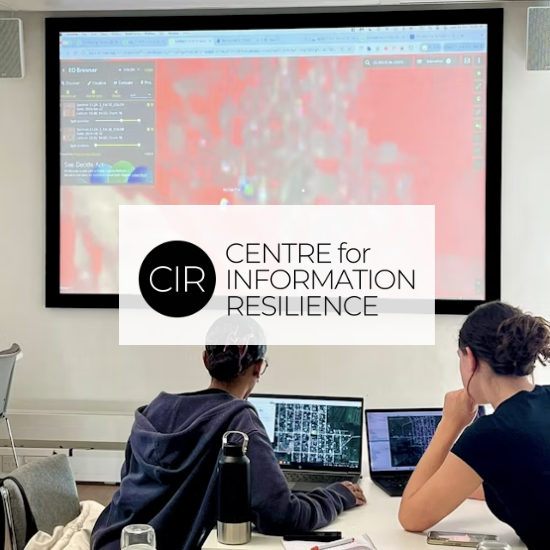
From the moment CIR was established, its goals were ambitious: gather geolocated, time-stamped open source material of conflict and potential human rights violations from a wide range of publicly available data sources (open sources) such as social media, satellite imagery, geospatial data, flight/shipment tracking and more. With an army of open source investigators across the globe, CIR follows a rigorous methodology to collect, preserve, analyse and verify hundreds of online open source entries every week. These entries are not just images and videos from social media, they’re movements of perpetrators who commit atrocious acts, photos of arms and shards of crucial information that may unveil the details of a war crime.
With this information, CIR is able to provide a picture of what happens, shining a light on the horrible acts that would otherwise go unseen. The information can be used to hold those responsible to account, through exposure in the media or through justice and accountability mechanisms. The data is also used to inform policy and humanitarian efforts so that conflict may eventually be mitigated, and support is provided to those in need.
The decision to partner with BDR
Initially, CIR approached BDR with a straightforward question about optimizing data storage and workflows. However, the conversation quickly evolved into a broader collaboration focused on enhancing CIR’s existing strengths and furthering BDR’s ethos of using data-driven solutions for accountability. Lewis, a member of CIR’s Data and Tech Team, recalls an early realization: “Our capacity needs were growing quickly. CIR had a strong investigative culture, but we needed the right tools to manage the scale, security, and consistency of the data collected.” BDR offered dedicated consulting time and technical know-how, the perfect match for CIR’s investigative expertise.
Building a future-ready data infrastructure
- Moving beyond basic tools
CIR had relied on a mix of available platforms like google sheets for data collection, verification and analysis. While these tools worked well in the organization’s early stages, BDR helped design a scalable approach that could handle the investigative load without creating bottlenecks. BDR advised and assisted with the use of Terraform (infrastructure as code - IAC) to deploy a range of containerised services to AWS. Atlos was one tool determined to be suitable to replace the google sheets workflow for the digital witness programs at CIR. - Securing sensitive information
CIR’s work revolves around documenting incidents that are often geopolitically sensitive, meaning safeguarding the open source information and footage was non-negotiable. BDR guided CIR’s Data and Tech Team in implementing a dedicated, cloud-hosted infrastructure with strong security protocols. This approach ensured sensitive data was protected, mitigating risks of tampering or unauthorized access. Advisory on automatic backups, permissions and rapid deployment through IAC also increased resilience in light of the risks. - Automating workflows with Mage AI
One standout improvement was the introduction of Mage AI to handle repetitive and time-consuming tasks, such as automatic attribute tagging or automated report generation. These changes freed CIR’s investigators to devote more time to their investigations, directly supporting CIR’s core mission of documenting human rights abuses.
Tangible results, stronger impact
● Scalability & efficiency
The new infrastructure now supports tens of thousands of entries, enabling CIR to process more cases per day in a scalable system. This has been a game-changer for global projects like “Eyes on Russia,” “Myanmar Witness,” “Afghan Witness,” and “Sudan Witness,” each of which requires meticulous data management at scale.
● Enhanced security & stability
Hosting data in a controlled environment, implementing stringent permissions and creating a robust plan of backups granted CIR peace of mind: the open source material they gather is safe, resilient and well-organized.
● Greater utilisation of data
With automated data pipelines, CIR can provide up-to-date maps, dashboards, and reports to partners and the public. It has opened the door to greater organisational data liquidity which allows for more in-depth analytical work in the future.
● Better investigator experience
Seamless workflows and reduced manual labor lessen the cognitive and emotional load for investigators, who can now focus on the heart of CIR’s mission - identifying and preserving crucial open source material of human rights violations.
A partnership that drives growth
Ultimately, the CIR-BDR collaboration went beyond addressing short-term technical challenges, instead developing scalable, secure and enduring data practice. Lewis explains, “BDR helped us refine and extend what we were already doing, increasing scalability and security. We now have a solid foundation to grow into new regions and capability.”
Looking ahead, CIR plans to explore cutting-edge data tools, machine learning capabilities, and advanced analytics to further streamline investigations and expand reach. Thanks to the combined efforts of a dedicated internal team and expert guidance from BDR, CIR stands ready to deepen its role in documenting abuses, raising public awareness, and contributing toward global justice.
Conclusion
The partnership between CIR and BDR demonstrates what’s possible when a forward-thinking nonprofit meets a team of data experts willing to invest time and talent in a shared mission. Today, CIR continues to document war crimes, hold perpetrators accountable, and support victims - all with a more resilient and sophisticated infrastructure behind them.
For BDR, it’s another example of how data solutions, when thoughtfully implemented, can bolster the efforts of organisations tackling some of the world’s most pressing issues. For CIR, it’s a testament to the power of strategic partnerships in scaling up a mature, professional operation committed to truth and justice.
"For every house, school, or life impacted by war crimes, there’s now a better chance that open source material will be preserved, truth will be told, and perpetrators held accountable," says Lewis. "That’s the real impact of this partnership."
Menno Herbrink, Sam Sweere, and Tom Uijtdehaag made this project possible. Contact them directly for more details.